Why do we use the Fibonacci sequence in Scrum?
I spent this weekend writing and reviewing the user stories for our new project. While I was working, a question came to mind:
Why do we use the Fibonacci sequence for estimation?
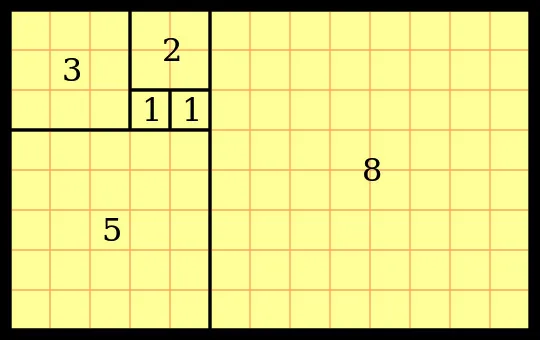
First, let me explain what the Fibonacci sequence is. It is a sequence where each number is the sum of the two numbers before it.
0
1
1 = 1 + 0
2 = 1 + 1
3 = 2 + 1
5 = 3 + 2
8 = 5 + 3
13 = 8 + 5
21 = 13 + 8
...
So when you need to estimate the Story Points or the Business Value of a user story, we use the Fibonacci sequence: 0, 1, 2, 3, 5, 8, 13, 21, 34, and so on.
After a little research, I learned that the human brain finds it easiest to tell the difference between two values with this sequence. Being a sceptical person, I tried it out a few times right away.
Example: please rate the following conversation.
- Sequence A: 1, 2, 3, 4, 5
- Sequence B: 1, 2, 3, 5, 8
Let’s say we use sequence A for the answer, and we want to give a good score. Should it be 4 or 5? Hard to decide, isn’t it? Now if we used the Fibonacci sequence and I asked you whether to give 5 or 8, it would probably be much easier for you to decide.
Now imagine discussing this as a team. When deciding the value of a story, I’m sure choosing between 5 and 8 is much easier than choosing between 4 and 5.
There are many resources about the Fibonacci sequence on the internet, with references to everything from the golden ratio to mathematics, architecture and nature. In this post, I focused only on Scrum, and on why we choose the Fibonacci sequence when we score or value things as a team.